


Your read: 19 min · The record: 47 minNot logged into Spotify? 30-second tastings.
Yes, I listened to the new U2 album.
No, I wasn’t going to say anything about it straight away.
Because that’s how it works with this band. You don’t get U2 on the first listen. You get them on the fifth, lyrics sheet in one hand, coffee in the other, muttering oh you sneaky bastards at the screen.
So let me be honest about the first one: Carnaval de Luz confused the hell out of me.
It doesn’t sound like them.
But somehow it does?
It’s very, very strange.
Too happy to be U2
My notes from that first listen open with a WTF, and I stand by it.
It’s too happy to sound like U2, lol. At least, the last decade U2. Fun guitar parts, uplifting songs, a party from start to finish. We are miles away from their last piece, Songs of Experience, which was, let’s be honest, dark af.
Not that these guys spent fifty years moping. They certainly know how to craft a joyful sound, and there’s a ton of it along the way. But on a whole album, it’s usually the exception rather than the rule.
And I didn’t trust it for a second. Because I know these guys. Oh, I KNOW these guys. It’s never that simple.
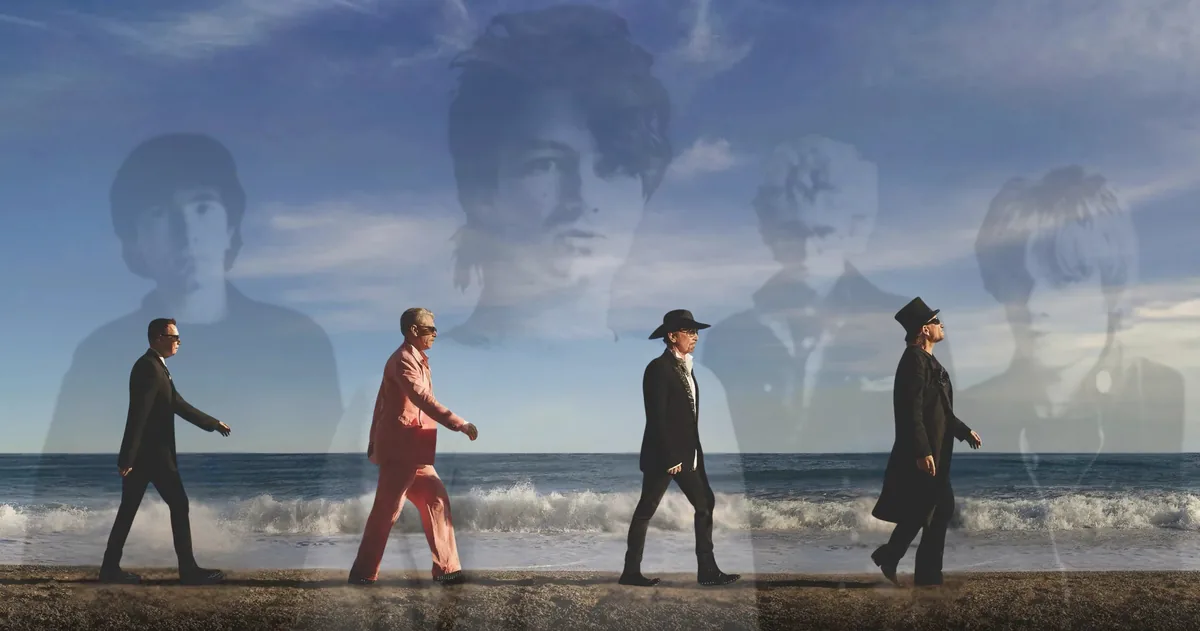
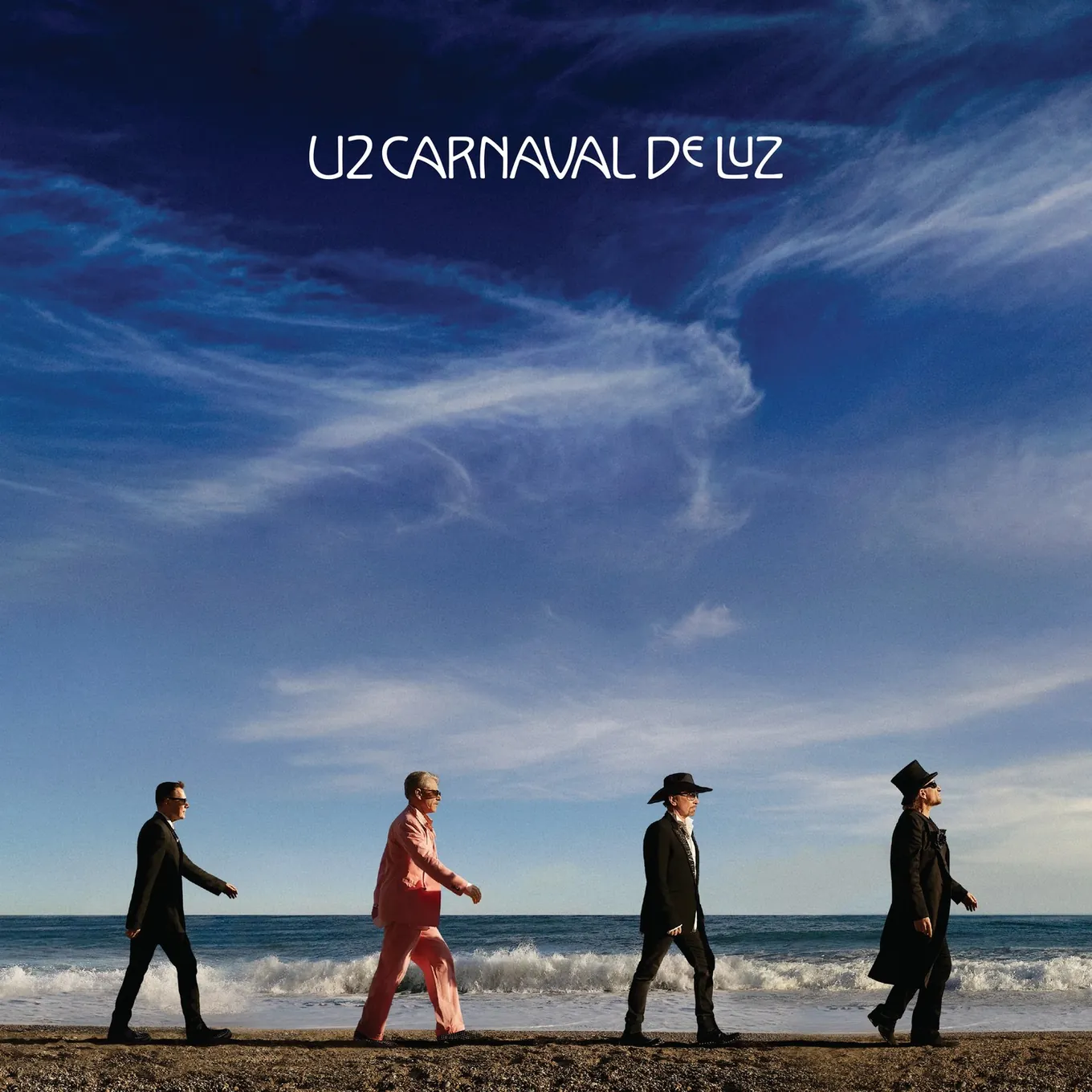
To be fair, I’d had my suspicions before the album was even out. Beatles-shaped suspicions. The title, first: Carnaval de Luz is, word for word, Carnival of Light — the experimental Beatles track recorded on 5 January 1967, right as the Sgt. Pepper sessions were starting, and never released. Then the cover: the four of them walking single file along a beach, in profile, like a certain zebra crossing in 1969. Then Street of Dreams, the first single, sounding happier than U2 usually allow themselves to sound. No idea if any of it is on purpose — of course it’s on purpose, it’s U2 after all. But this album has a very obvious thing going on with musical heritage, so I’m counting it.
It’s their first album of new songs since 2017, and this year they’d already dropped two EPs out of nowhere, Days of Ash and Easter Lily — one political and angry, one reflective and hopeful. Maybe that’s why they needed to put those out first: to get it out of their system before they were allowed to throw a party. And some things never change: you can always count on these fellas for good craic.
It’s also the record with Dolly Parton’s last recorded vocal on it. Hold that one. Carefully, please.
Because this album plays like a night out. The party first. A prayer in the middle. Then everything that happens after midnight. And the last time I heard that progression on one of their albums, it was my underrated baby, Pop. So of course I’m interested.
Let’s get this party started then, shall we?
(bubble pants not included)
Side A: everybody in fancy dress
Here’s what I worked out once I stopped being confused and started digging. Fair warning: more facts than usual on this one. That’s what happens when I write about a band I know like the bottom of my coffee cup.
The first half is all about the sound, and the sound is a timeline. Music history — theirs, and the world’s — going past you like a carnival parade, every float an influence, all of them in costume, at full volume.
I played Go about ten times in a row before even moving on with the album, because it got on my nerves. It sounded like too many things I know at once. Bowie’s I’m Afraid of Americans. Weirdass electro. Kraftwerk. Zooropa, with that what-the-fuck-is-happening-now intro of theirs. Then it hit me: it’s Talking Heads’ Once in a Lifetime meeting The Clash’s The Magnificent Seven — on the ZooTV stage. Eno’s touch all over it, which makes sense, since he produced Once in a Lifetime in the first place. Bono calls it an invocation, an invitation, a little flirt to open the festival. Of course it is. Go on, you chancer.
Then comes La Reina — and I was half expecting Even Better Than the Real Thing to start playing with that intro. Weird feeling: that all of U2’s discography could fit inside that one song. It could have been an Achtung Baby demo, honestly. Fun bass, soaring chorus.
But then the chorus does something else. There’s a reminiscence of Boy in there — A Day Without Me? Their very first single, from their very first album, 1980, sneaking into a 2026 carnival. And going up to those high notes, I swear I thought of Grian from Fontaines D.C. Which is funny, because now you have to wonder who inspired who. Two Dublin bands, two generations, and a lot of respect going both ways — Bono and Edge were name-checking Fontaines only recently as one of the bands taking things in a different direction. Forty-odd years apart, same city, same vibes.
And a queen: in carnival tradition, someone from the street gets crowned for a few days and turns the power pyramid upside down. Keep an eye on the queens. There are a few — and no, it’s not Bono and Edge.
Next float in the parade: Street of Dreams. Typical U2. Every album of theirs has one: the song built to be the perfect radio hit, with lyrics easy enough to stick to your brain like that beanie on Edge’s head.
And I really disliked it when I first heard it. It felt like exactly that — that annoyingly easy one.
But the more I listen, the more it sticks to my brain and won’t let me go. You can’t fight the infectious joy for too long, seemingly. It gets in, and it stays.
Freaking Irish. They got me again.
And it keeps the carnival going. Back in February 1991, right in the middle of making Achtung Baby, U2 went to the carnival in Tenerife, and Anton Corbijn photographed them there. Thirty-five years later, they’re throwing their own. Full circle.
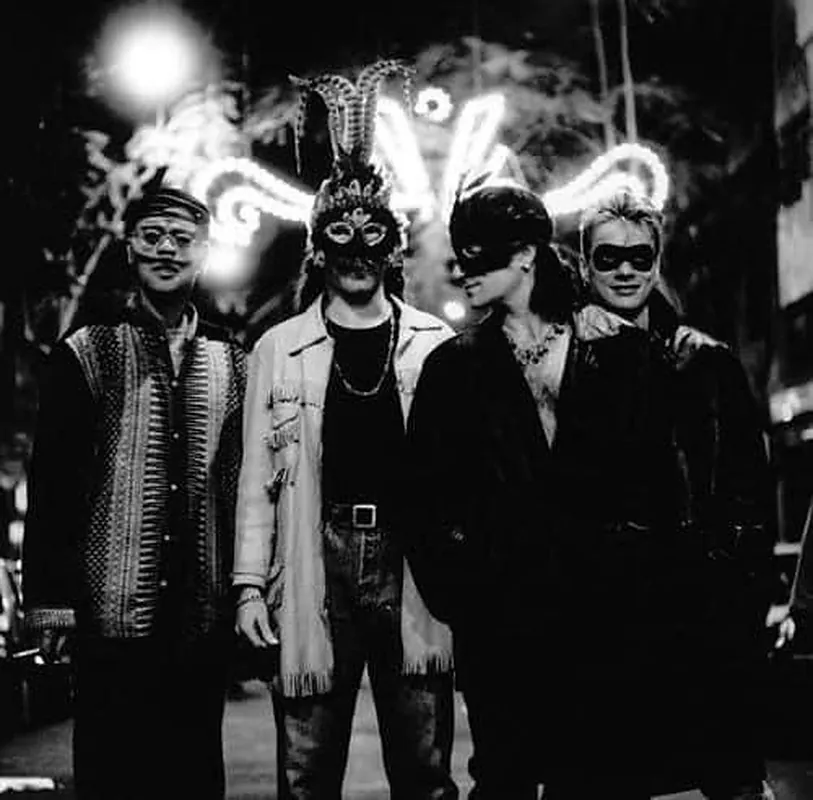
Maybe they never left Tenerife, actually. It would explain why U2 are once again pretending they can speak Spanish all over this album — La Reina, Silencio, and even Portuguese with the title itself. Ay, meus.

Then The Mirror Maker throws you a curveball. It opens with real Unforgettable Fire vibes — the record where Eno and Lanois first got their hands on U2, back in 1984, and Eno is all over this one too. And that intro takes you by surprise. That soprano? That’s Bono. Impersonating Rosalía. Because this is their song for her, and no, she’s not on it: they tried to get her to sing it, then realised it made very little sense for someone to sing on a song about themselves. Then the guitars come in, and you don’t see them coming either. And THOSE BELLS, EDGE — that chiming thing only he does, the one you’d recognise in three notes. Fun song.
“We normally just write songs about people in jail or dead people,” Bono told Rolling Stone. Not this time. And here’s the best part: about her last album, Lux, he said she’d “arrived at the same point just before us, which is annoying and also really inspiring”. Lux. Light, in Latin. A record about spirituality and transformation. And here we are with Carnaval de Luz. Rosalía got to the light first, and U2 wrote her a song about it.
The first queen.
Last float before the break: Superficiality — and here I’m going to stand on my own a bit (big surprise, I know, not like I’m always rooting for the underdogs or something), because the press has been rough with this one. It’s the first song that sounds like it’s from our current time. It could almost be someone else’s: not that many U2 markers, more on the pop side, Edge on vocals in the chorus, a really fun, danceable bridge. Then I read what Bono said about it: a disco song played by a punk band who can’t quite play disco, starting out “a bit Talking Heads circa 1977”. The most modern-sounding thing on the record is built on 1977. The year of punk… and of Saturday Night Fever. Somewhere, the Bee Gees are nodding along.
Second listen, same verdict: still a fun tune. There’s even a bit of All That You Can’t Leave Behind vibe in there — the last time they walked out of an experimental phase this sunny, back in 2000. Not everything needs to be deep. After Songs of Experience, after the ashes, fresh air is nice.
Bop. I’m keeping it.
So, let’s take a look at the parade for a minute, before we shimmy back into the procession. From 77 punk to Berlin, from Kraftwerk to ZooTV, from gospel to an Irish lament, all the way to Martin Garrix, a Ryan Tedder production credit and songs you’d swear came out of an Imagine Dragons or a OneRepublic session. For a band that said ten years ago they might make music just for their fans from now on — well. They did. They just invited the fans’ grandkids too. Fifty years in, they’re still not letting go, and I find that interesting.
And then there’s Achtung Baby, everywhere. Which is the funny part. In 1991, that was the record where they burned it all down to reinvent themselves — chopping down the Joshua Tree, their words, not mine. Here, they use the same sounds to do the exact opposite: to show you the family tree. This time it’s not a bonfire of their past selves. It’s more like a warm, cosy gathering around the fire, and every one of those past selves got an invite +1. Claiming mine — scoot over, lads.
The Clash, I’ll defend twice. Once for the punk rock energy of the fast, short ones — Go and Silencio are both done in under two minutes forty. And once for the trick. Think Rock the Casbah — you dance to it, and it’s about a regime banning music. A joyful sound wrapped around heavy stuff.
Remember that one.
Messy? Absolutely. And they’d be the first to say it. Back in April, on Good Friday, Bono said they were still working towards “a noisy, messy, ‘unreasonably colour xerox’ album”. He’d been promising us “an unreasonable guitar record” since 2023 — Edge apparently rang him to ask how unreasonable, exactly.
Well. This unreasonable. English and Spanish tangled together, a party going off in every direction at once, nothing polished, nothing squared off. By U2’s standards, at least, that’s properly unreasonable. It’s not the tidy, stadium-perfect U2 we know.
And honestly, we’d waited long enough. Nine years since Songs of Experience, their last album of brand new songs. They promised us a direction, and they kept their word. I think we all needed a clean break from the whole Songs of era — and maybe, after all those introspective records, they needed something lighter themselves. Which might be why our magician went and conjured up the spirit of Achtung Baby and ZooTV: the last time they decided to stop being reasonable.
Chaotic liveliness. That’s side A. And yes, this review is all over the place too. Channelling my inner Bono and shit.
The prayer in the middle
And honestly? Halfway through, on that first listen, I didn’t really know where we were going anymore. I always bring my dancing shoes, just in case. But damn, guys, they’re not made for walking miles.
Then If the World Is at War We Better Not Be — I didn’t even feel the change of song. The pause in the album, clean sound, vocals pushed forward. Like a praying Bono. Like the opposite of a complaint.
Then I read the lyrics, and yeah. It’s a prayer. Clearly.
Bono says this one goes from Mount Temple to the devil — back to the school where it all started — and that he’s never been quite so gothic. It sits right in the middle of the album, track six of twelve, the moment side A hands over to side B.
Less Cat Stevens’ Father and Son. More a son talking to his Father.
And this is where the calendar clicks. Remember those two EPs? Days of Ash came out on 18 February: Ash Wednesday. Easter Lily came out on Good Friday. And now the carnival — the party that comes before all of that. For those of us lucky enough to not carry that freaking Catholic guilt: carnival is the last big blowout before Lent, the forty days of giving things up that start on Ash Wednesday and end at Easter. They released the whole thing backwards: the grief and the resurrection first, the party last. They needed to go through the ashes before they were allowed to dance.
Inside the album it plays out the same way. The party, a prayer in the middle, the devil turning up in a few songs, and then midnight, the moment the carnival stops and the day begins. IYKYK.
I don’t need to write a religious essay about this record. But the path is clear for anyone who wants to follow it. The hope and the faith can just as easily be in the world, in someone, in a relationship. With U2, you can always read it more than one way. That’s the point.
Side B: after midnight
Here’s where the party sound starts carrying the heavy stuff.
Straight out of the prayer, Silencio — big guitars. The single was already out and I loved it a lot more than Street of Dreams. Works great loud, and will probably do the same live. Funny thing to call the loudest rock and roll song on the record Silencio — freaking Bono and his enigmas. His answer: it’s a prayer too, about two silences. The one you’re forced into when you’re afraid to speak out, and the meditative one, where you get a chance to speak to “what you might call God”.
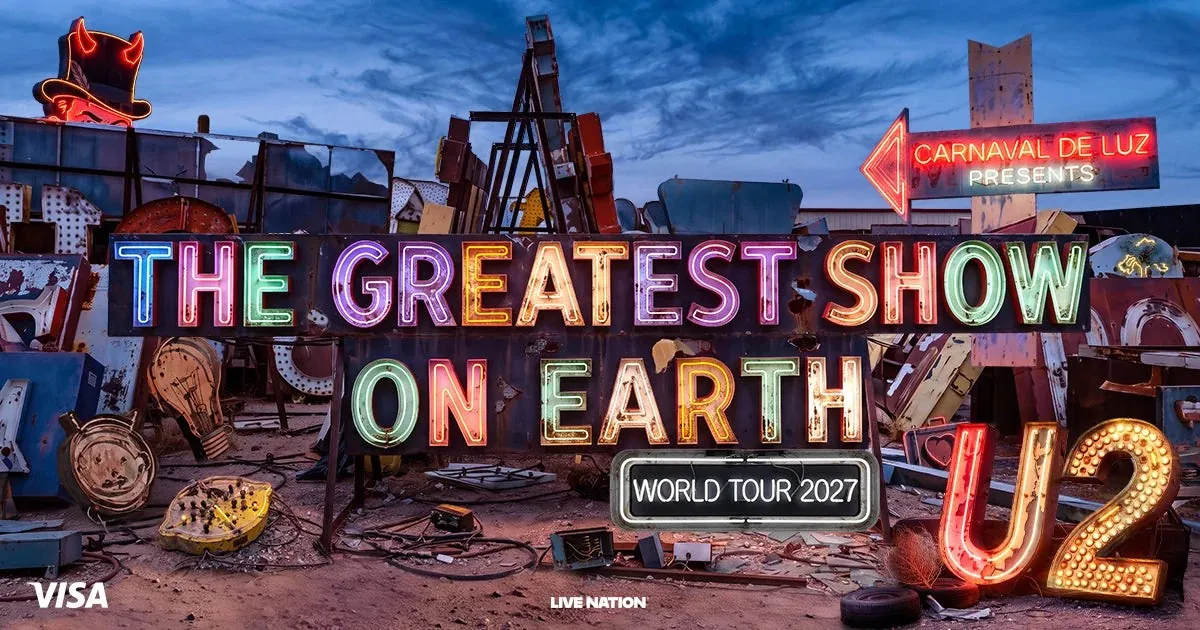
Then the showstopper: The Greatest Show On Earth — I already reviewed it, so I won’t repeat myself. Still the best song on the album. And undoubtedly one of U2’s great songs. I wasn’t sure about its placement at first, but Bono says he wanted to write a song like You’ve Lost That Lovin’ Feelin’, “but about a performer”. The showman’s song, in the middle of the carnival. It’s also the name of next year’s tour. Fair enough, I suppose. One day it’ll click, and I’ll have to rant at the man for being right. Again.
Glorify comes next, and it made me perk up at the first note, then the verse made me sit down. The magic of an acoustic guitar. With a title like that you half expect something explosive; instead there’s a lot of humility in it, shared voices in the chorus, almost gospel. It started life as a little easter egg at the end of their Sphere shows with Brittany Howard — “a transcendent singer”, says Bono, and I couldn’t agree more. She’s one of those mesmerizing singers that seem to come right out of another time. Go check Alabama Shakes, people, you won’t regret it. They reworked it with Martin Garrix — the prodigal son returns once more. The poppiest sound on the album, carrying what’s almost a declaration of faith, even when everything goes against you. And very U2: you never quite know who’s talking — someone to a lover, someone to God, or whatever universal force you believe in, to us.
And then we hit midnight. Midnight Sunshine — the title caught my eye the first time I saw the tracklist. A calmer song that seeps daylight, and soars higher mid-song. I heard it as almost folk; Bono calls it “soul shenanigans” à la Smokey Robinson, about “the difference between hope and faith”. Now, U2 fans, raise your hands: anyone who knows Lemon knows exactly what happens at midnight in U2-land. Bono’s falsetto, the Zooropa era. That chorus like an echo to Shine Like Stars, the coda they tag onto With or Without You live. Back on the ZooTV tour in 1993, Lemon went straight into With or Without You every time they played it. Maybe I’m making up my own sunshine here, but it made me smile too much not to mention it.
Last round before closing time: Can’t Stop Us Now — on the first listen, I was underwater. Sonar sounds, a bass like an alarm, and a guitar that lifts your head out of the water. Or out of a slumber? Bono, meanwhile, was at the bar: the Floridita, in Havana, Hemingway’s favourite flytrap, with Adam on his zero zero. Two very different pictures, and I’m keeping mine. Because then you read the lyrics. A song set in Havana, of all places, where a rainbow turns its back on the gold and that’s the revolution. Bono being very clear about how he feels about the current US president, I’ll read that as a little jab on the sly, golden-age America and all. A sea, a rainbow and a leaf on a branch in the same verse: the picture after the flood, peace coming back. And that leaf hanging on until its branch has grown into a whole tree? That’s patience — the kind of change that takes time to grow before it lets go. Hemingway’s Old Man and the Sea is out there somewhere too.
And there’s a proper Beatles vibe floating around in there. Not one song in particular — just the sounds, the way it’s built, the way it twists. Carnival of Light, remember?
Well. That’s a fuckload of things hiding behind a daiquiri, Mr B. Party song, my arse.

Last orders with Dolly
And then, seamlessly, Torn.
Raise your glasses, everyone.
The last duet by our beloved Dolly Parton.
I won’t lie. Hearing her voice got me teary-eyed immediately. Dolly died on 25 August, at 80.
But I’ll take comfort in the fact that it’s a really nice song to be a last song. Like a sweet Irish lament, the kind that needs to be sung with company. Everything is as it is, a kind of sweet melancholy pulsating through that sound. Bono says this one was born to be the last track on “our family album” — and those Appalachian ballads Dolly grew up on mostly came over from Ireland and Scotland in the first place. Of course it sounds like a lament.
I hear Cat Stevens in it. I also hear The Wanderer, the Johnny Cash song that closed Zooropa in 1993 — U2 handing the last word to a giant country voice, again. Except Johnny Cash still had ten years ahead of him. This is Dolly’s last.
And look at what it says. A family tearing itself apart. People who share the same blood and can’t reach each other anymore. It’s credited to U2, Dolly Parton and Johnny McDaid — they wrote it together. Coming from Dolly and Bono, two people who’ve spent their lives working for acceptance and peace, that’s quite the parallel with the state of the world right now.
Side A ended on the world at war. Side B ends on a family at war. Both times, the answer is a prayer, or a song you sing together.
Bono calls Dolly “the queen of our carnival”. It opened with a song about a queen crowned by the street, and the last word goes to one born in a one-room shack in the Appalachians.
The second queen.
And the third? At their TikTok launch on 12 November, Bono said that when they play La Reina live, fans will get to pick their own carnival queen, city by city.
Three queens. It’s U2. Of course it’s a trinity.
The third one could be you.
Party’s over. Or is it?
Behind the mask
Carnival means masks. And this band has always loved a persona.
The Fly in 1992. MacPhisto, the devil in a gold suit, in 1993 — and the devil keeps turning up on this album too. The top hat and the eyeliner on the B-stage in 2018, on the eXPERIENCE + iNNOCENCE tour, when Bono ran his little monologue about the band losing their heads in the late 80s. Paul is dead, he’d say. The name on the door had changed. It’s Fucking Bono now. SIR Fucking Bono. Then they played Even Better Than the Real Thing — which, you’ll remember, is what La Reina sounds like.
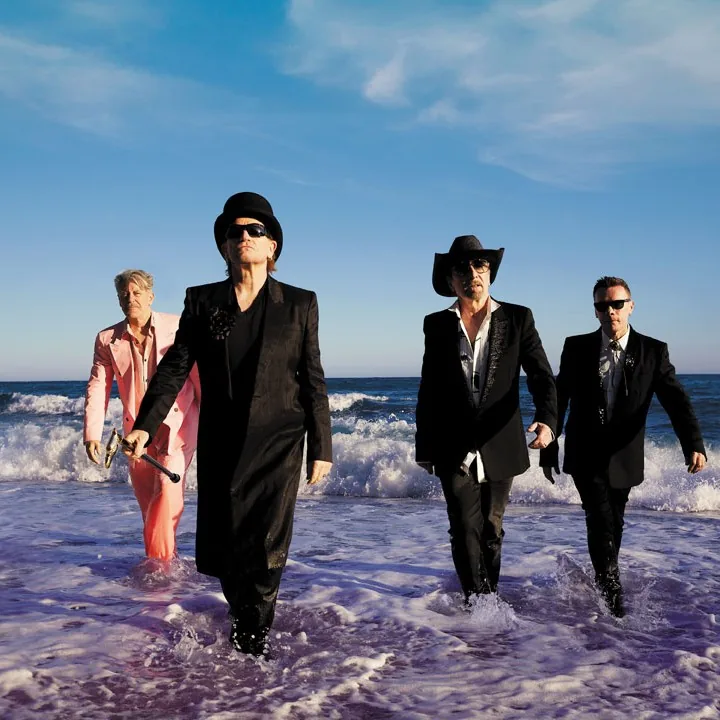
And look at the cover: Bono in a top hat and dark glasses, again.
So yes, it’s a carnival. It’s joyful, it’s fancy dress.
But behind the mask, there’s the man.
And the man has changed the way he says things. Not the voice itself. Less shouting. Less of that tone climbing like a relentless fight. Instead, the man-to-boy advice that’s run through their whole discography. The roar of the young man has somehow become the voice of the father: calmer, wiser, with more discernment.
Back in 2001, talking to Rolling Stone about sitting at his own father’s hospital bed, Bono said that “maybe humility is the eye of the needle that we all have to pass through”. I think U2 have reached that point in their career. You don’t need to be loud to get a message across.
The funny thing is, the music carries that more than the man himself. The big guitars hit, so Bono doesn’t have to throw the punches himself. Eno is all over it. Edge finally sings more — and that angel voice of his deserves it. And Adam and Larry, hats off. The rhythm section is still the backbone of every song, but on a lot of this album it’s laid bare, and you can appreciate every bit of the precision. Damn, all these songs rely hard on Adam Clayton’s groovy bass lines, more than usual. Probably some of his best, to be fair. And Larry — oh, Jam Jar, what an exquisite pleasure to have you back behind that kit.
So, is it U2?
On the first listen? Maybe not pure U2. The sound is different.
But as usual with them, you stay with it. You start digging. And everything falls into place.
It’s U2 in the echoes of themselves across their whole career. It’s U2 in the influences their fans know by heart. And above all, it’s U2 in the things they’ve been singing about forever.
Good craic, laced with a stiff shot of whatever’s on fire right now. If that’s not U2, I don’t know what is.
People are calling it their best album in decades.
Is it?
Honestly, I can’t tell you yet. I can’t even tell you where it sits in my own U2 ranking. We all know how long a U2 album takes to properly reveal itself: months on loop, and then the live shows, because that’s where their songs actually come alive.
What I can tell you is that it’s a smart record. They pulled every piece of themselves into a sound that sits right in today’s music, so much so that a few of these songs could pass for someone else’s. That’s the clever part. It’s also the catch. They reinvented their sound; they didn’t reinvent the wheel. And the fans already crowning it number one, dazzled by all that freshness, might not notice that part.
So if you want to call it their best, go ahead and enjoy the magic trick, fairy dust and all. Me, I’ll just keep in mind that my favourite album to date is one I couldn’t stand for ten years.
Bono has spent fifty years chasing great songs rather than good ones. He caught a few here.
Not every time. But that’s already pretty remarkable for a band that has been at it this long. They still have enough creative juice under their hats to spark a few gems, and that’s the real best thing about it all.
It’s U2… in 2026, actually. And I wouldn’t have expected it any different. Still pushing, still reinventing.
Because here’s what I know is the truth:
The day U2 sound like U2 is probably the day they’re done.
Ha.
Carnaval de luz
Don’t wanna find myself, I wanna lose myself in you
Dammit. There we go again. On loop in my braincells.
Not a carousel.
Not a roller coaster.
But the full tour of the fun fair.
And this time, Bono didn’t trick us.
Maybe.
Probably.
The upcoming tour could have more surprises up its sleeve.
Roll up, roll up! Off with the horns, on with The Greatest Show On Earth. Or maybe the other way around this time.
Cup score
90
Cup of Excellence
How this cup scored
- Songwriting
- 8
- Performance
- 9.5
- Production
- 9
- Cohesion
- 8.5
- Aftertaste
- 10
Tasting notes — bright · defiant · long finish